Beyond Security Culture
Building genuine resilience to repression
If your security culture is isolating you and your group from the wider movement or your allies, it may be making you less safe, rather than safer.
Information security is important - but narrow interpretations of ‘security culture’ can put activists at greater risk and hamper movement growth and power.
One of the key goals of political repression is to isolate and separate social movements from the wider population. This article explores how some interpretations of ‘security culture’ can increase isolation, and potentially undermine the collective resilience of our movements. It outlines how good risk assessment and relational security can enhance resilience to repression.
The challenge for activist groups is to choose security strategies that are genuinely protective, and that can build resilience to repression rather than just anonymising and isolating us from each other. Many activists have noted the tensions between ‘security’ and alliance building; between ‘anonymising’ and bringing new people into the struggle, between ‘locking down our profiles’ and mobilising. An intense focus on security culture makes these tensions very difficult to navigate.
Many activist groups in Australia, US and Europe, particularly those engaged in direct action or civil disobedience, have adopted security practices in response to the ever-increasing encroachment of the surveillance state, targeted police repression and the risks posed by hostile opponents such as organised fascists. “Security culture” is short-hand to describe a set of practices and behaviours that emphasise anonymity, working in small, trusted groups, sharing information on a strict ‘need to know’ basis, and the use of secure, encrypted or anonymising online communication practices. Ideally this becomes a set of behaviours shared by a community of activists, designed to minimize risk. A central principle of security culture is that people should never be privy to any sensitive information they do not need to know.
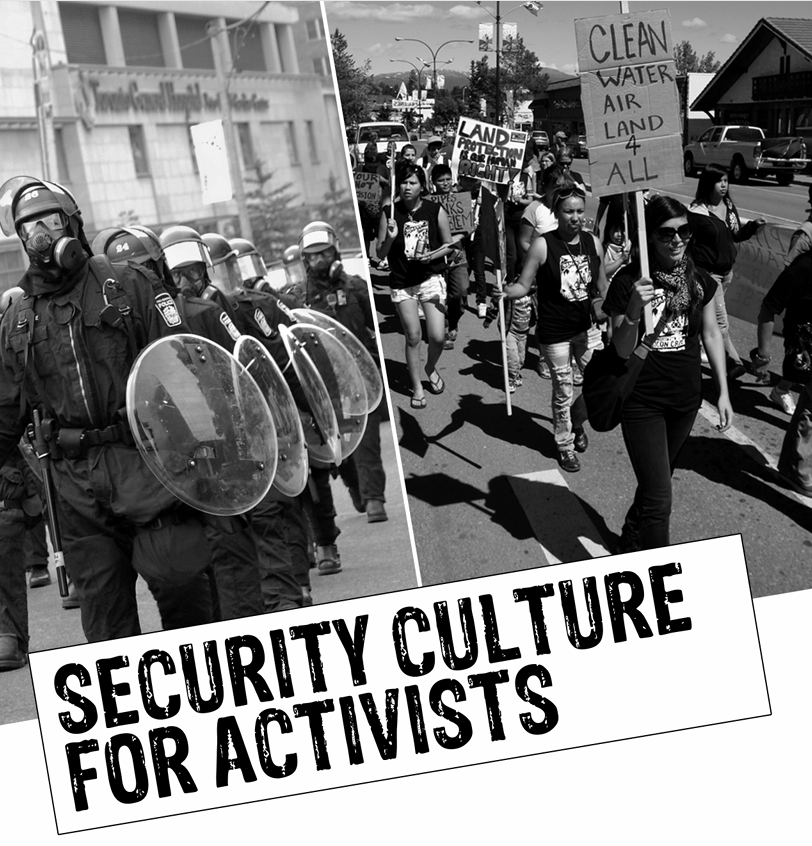
The impetus to lock-down our collective and personal security is wise. Targeted political repression is an historical and current political reality. Very many movements have been undermined by slack information security. The strategy of state repression is multifaceted and sophisticated. Governments have marginalized, channeled, infiltrated, co-opted, and repressed progressive movements throughout the Western world for well over a century. The risk of doxing or reprisals by non-state opponents, including fascists, is real.
Many activist groups, however, have adopted ‘security culture’ practices in a narrow way, or to a degree that has served to isolate them from sources of support, legal and human rights bodies, from civil society allies, and even friends, and communities of support.
Examples abound: an activist group decided not to create a contact list due to security concerns, so was left with no way to follow up interested allies or build for the next action. An activist group refused to alert legal support networks before a high-risk action, so that arrestees were left to fend for themselves. Activists masking up to the extent that forming bonds of solidarity become impossible. Activists eschewing opportunities to develop relationships, alliances or networks by remaining anonymous, aloof, and unreachable.
The best guides to security culture don't advise activists to keep everything secret, to not tell anyone about an action, or to isolate themselves completely. But, in many cases, activist groups are applying operational security practices which are not only harming their ability to organise but, ironically, have eroded their ability to withstand repression.
Information security is important. But so is resilience
“resilience, as so many groups in war-zones, in dictatorships and in periods of intense political repression have found, depends largely upon relationships of solidarity and support.
Resilience is the ability of a group to withstand repression. It goes far beyond security culture practices to how the group stays together, supports each other and is able to sustain itself through protracted legal or extra-legal repression. That resilience, as so many groups in war-zones, in dictatorships and in periods of intense political repression have found, depends largely upon relationships of solidarity and support. It is when we are facing the hostile attention of the state that we most need people to come to our aid, to visit us in custody, to arrange legal and political support, speak out for us, tell our story, raise funds, to back us up and help us survive it. No activist group can take this level of solidarity for granted. It is the result of solid effort on relationship, community and movement network building.
Security culture, when it is narrowly defined, tends to isolate groups from their allies, their sources of support and key resources. The tendency in security culture practice to anonymise everything creates a barrier to building the sort of relationships of solidarity that will be critical if you are facing repression.
So what is security culture missing? There’s two key things that most interpretations of security culture tend to miss or dangerously under-emphasise.
The first is the need for risk assessment that allows us to make more accurate and realistic security choices.
The second is an understanding of relational security that recognises the strategic importance of reaching out to others.
We’ll take each in turn.
Risk assessment for activists
Good risk assessment cuts through the paranoia and aims for what are realistic security approaches for your particular context.
The template for repression is very old, but the political context for surveillance and repression is always changing. As activists we need to analyse and understand this context.
Risk assessment is about developing the most accurate and comprehensive understanding of your particular risks in the context that you work in. No risk assessment can ever be 100% certain but you're not aiming for certainty. You are aiming for ‘realistic’. Risk assessment is about being as accurate as possible, and reducing the amount of unknowns.
Good risk assessment cuts through the paranoia and aims for what are realistic security approaches for your particular context.
As a process you generally start with big-picture context assessment, and drill down to as much local, recent information detail as possible. Everything is important.
Your context is made up of a wide range of factors:
- Your movement, and the government policies or cultural norms it opposes
- How large your group is
- What sort of political actions you take
- What resources you have available to you
- Who are your friends and allies and what are their resources
- Who are your major opponents and how much political power and influence they have
- What’s happening and who is saying what around you.
Risk assessment involves monitoring all of these factors and taking them into an assessment of your ‘context’. A change of government, or new legislation, a series of hostile media articles, or any new information can mean re-assessing your risk profile.
This means monitoring mainstream and social media, relevant reports and noting and tracking comments by politicians and opponents. Tracking indicators of targeted repression like police attendance at protests, house visits, and charges being used against activists. Staying in touch with movement information networks and those who are also monitoring risks and repression like legal and human rights groups.
It is in the state’s interest to foster the idea that a vast and powerful surveillance network exists. Stories about elaborate surveillance technologies create an atmosphere that discourages activism. This is part of the repression and is the first element that needs to be resisted.
Stories that proliferate in activist circles, often shared by tech-savy comrades, of the projected capabilities of technology, whether they have been adopted by law enforcement in your area or not, can generate the idea that surveillance is omnipresent. This framing leads to paranoia, fear, anxiety, and repels people from staying involved in radical movements. It also means that groups tend towards taking a “prepare-for-the-worst-case-scenario-at-all-times approach.”
In fact the security apparatus of all states is far from omnipotent. Like all systems it is made up of human and bureaucratic processes. The foci and priorities of state surveillance change and shift.
Good context and risk assessment allows groups to build a more accurate and realistic picture of what sorts of risks they face and then build security practices based on that assessment. Is it better to hold an open organising meeting so that fifty people attend, rather than a locked down meeting with only five. Risk assessment will help you make those choices.
It also encourages groups to think more broadly about risk.
A group's greatest risk might not be state surveillance or infiltration. It might be that your group does not have a support network large enough to support it when you are actually experiencing repression.
So what is 'Relational Security'?
If your group is experiencing repression, the relationships you have with other activist groups, with unions, legal groups, church groups, civil society organisations can be critical in determining how much solidarity and support you receive when you need it most.
There is security in our relationships. This sort of security comes from relationships of solidarity far wider than your immediate circle of support.
No matter how good our opsec (operational security) is, isolated activists can easily be picked off the state. Small, anonymous groups can be demonised, isolated, arrested and imprisoned, no matter how good their security culture is.
It is much harder to repress an activist or an activist group that is part of a larger network, if they have lots of friends and contacts, people who can speak up for them and provide practical support.
Security is about relationships - the relationships you and your group have with other groups and people. If your group is experiencing repression, the relationships you have with other activist groups, with unions, legal groups, church groups, civil society organisations can be critical in determining how much solidarity and support you receive when you need it most. The higher risk your group is facing, the stronger your relational security needs to be.
‘Security Culture’ tends to neglect the need to develop real world relationships of trust and respect that are critical to solidarity and ultimately, your security.
The simple danger is this: If nobody knows who you or your group are, it is harder for them to act in your name or step forward to protect you.
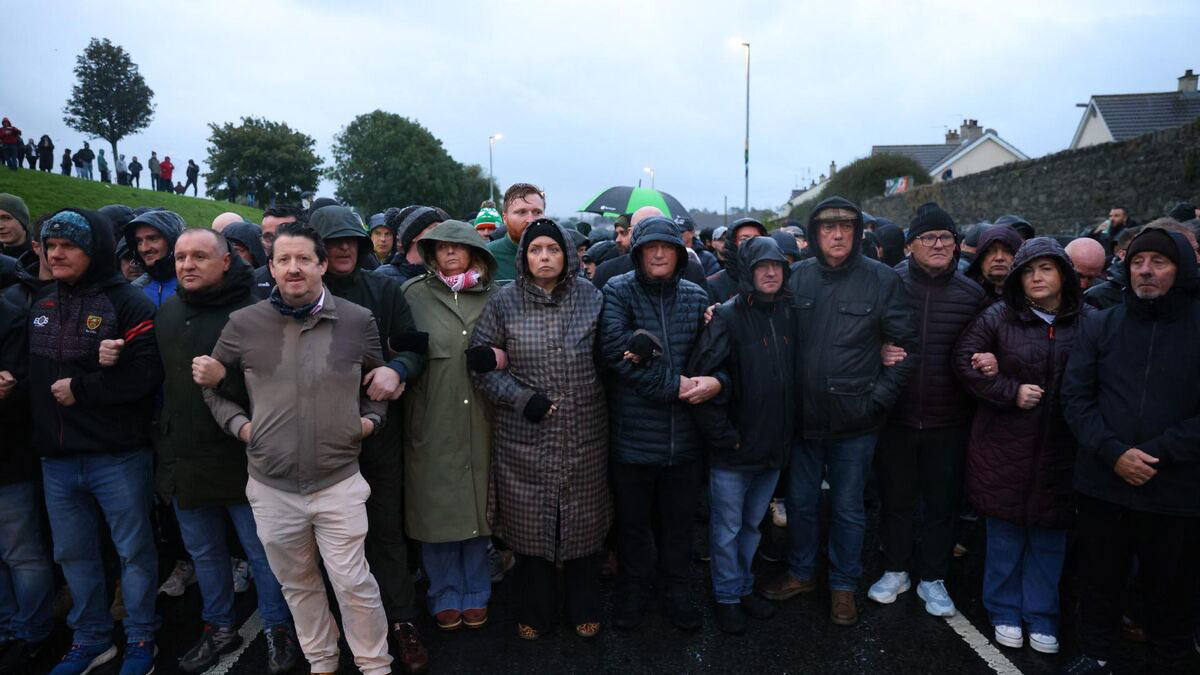
We all like to think that the wider movement will step up and support us. But widespread, sustained movement solidarity does not just happen spontaneously. It is most often the result of decades of solid relationship building. For networks of support to take action when called upon, very many relationships need to be activated. It is often these close connections that are drawn upon when the state acts to repress a group.
The movement leaders and organisers most targeted during the COINTELPRO years in the United States were those who were building alliances between movements, between Black and white communities and organising widely and strategically for real change. That’s what made them targets, but that’s also what made them so powerful.
Strong, democratically organised movements which are authentically inclusive and can build support across differences are both the most likely targets for political repression - and our best defence against it.
Building resilience to repression
In areas of intense and very deadly political repression, activists of all types, farmers’ groups, anti-mining organisers, land defenders, women’s organisations, lawyers, unionsists, LGBTQI activists or Indigenous leaders, often face the very real threat of death, disappearance, imprisonment and torture due to the work that they do. To survive, these activists are often faced with three choices: to continue to work openly, to work clandestinely (go underground), or to stop doing the work altogether.
Many groups recognise quickly that working clandestinely would not allow them to organise, challenge the powerholders or defend their communities very effectively. They also recognise that it may make them more vulnerable. Clandestine groups are easily labeled as terrorists or criminals and quickly become isolated police targets.
"Your real protection lies in numbers. In crowds. In collective action that is difficult to isolate and crush quietly. That means bringing people into the streets. Organizing strikes at workplaces. Printing leaflets and distributing them in broad daylight, face to face, in schools, campuses, and factories. It means standing at the front of a mass protest, not disappearing into anonymity." - Hossam el-Hamalawy
Groups can continue to maintain their open program of work despite extraordinary risks with planning, security measures and training. For those activists and human rights defenders working under repressive regimes relational security is a critical part of their security framework.
This sort of security framework emphasises the importance of relationships with key allies, and human rights bodies and coalitions, backed up with solid training, clarity of purpose, and continual context & risk assessment. They constantly monitor how the group is perceived by the state. All of these factors are core to security.
Here are some basic steps to building resilience to repression:
1. Set up your support structures deliberately. Build relationships across difference, across class, gender, racial and religious lines. The reason for this is to systematically increase your profile and networks. Build positive links with others in civil society beyond your groups immediate circles. Ask for specific support from those who you trust, other campaigners and activists and allies such as parliamentarians, priests, Imams, union or other community leaders. This signals to the people who may be watching you that you have friends in lots of places and can deter harassment. Repression aims to marginalise you politically – it is important to actively counter this.
2 Focus on relationships. Relationships are hard work. Navigating personal, intersectional, or ideological differences is one of the most challenging things we do as activists, but it is core to the work. It is far easier to clean your online presence than to work through a movement conflict. We don't all have to be best mates, and accountability is important, but so are relationships of respect and trust. The most effective organisors know that relationships are what gives movements strength and are a vital part of our security.
3. Practice and demonstrate solidarity. If you know of others who are experiencing some form of surveillance or harassment then offering genuine solidarity and support is vital. Solidarity creates trust, respect and more solidarity.
4. Shine light on repression. You or your group can make a clear decision to expose any repression you experience to the wider movement, and to the public and the media. Provide evidence to journalists, prepare and release a public document. Expose the repression as undemocratic and an injustice and demand redress publicly and in conjunction with legal action. Sharing stories helps other groups assess their risks. Don’t wait for the courts – use public protest and build public outrage outside as well as in the courts.
5. Don't get hyper-focused on Opsec. Develop a security culture based on a realistic assessment of your actual risk. Assess your practices against that risk. Recognise that relational security is just as important, and in many cases may even keep you safer. Your security framework should combine operational security with relational security.
Anthony Kelly
October 2026
See also: Surveillance in the context of Political Repression
A Case study
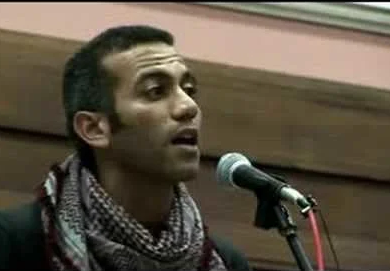
“Since the start of the ICE raids, and periodically whenever social eruptions take place in the US or Europe, I get messages from comrades and friends asking how Egyptians organized under repression, especially how we protected ourselves from electronic surveillance.
So let me clarify a few points.
First, and most importantly: you cannot beat the state at its own game. Frankly, I see US and European activists fretting over digital security far more than Egyptians ever did. There was never a genuinely secure way to protect ourselves electronically from the regime and its surveillance apparatus. Any advice I could offer would amount to the bare minimum. You simply cannot outplay the state on terrain it fully controls.
Yes, we had brilliant IT wizards inside the movement. They played a heroic role drafting security manuals and teaching people how to use the internet as safely as possible. That mattered. But strategically, we chose a different path.
Our choice was to become more public, not more hidden. More visible, not more clandestine. This did expose our members to repression. There is no denying that. But we sought to counter that risk through scale, visibility, and broad public participation.
This is why tactics common among many US and European activists, masking faces, ditching mobile phones, extreme operational secrecy, were not options for us. We needed people to see our faces. We needed to communicate quickly, even through phones we knew were monitored.
The level of security some Western activists aspire to resembles what an armed underground organization would require. That has never been our politics.
Your real protection lies in numbers. In crowds. In collective action that is difficult to isolate and crush quietly. That means bringing people into the streets. Organizing strikes at workplaces. Printing leaflets and distributing them in broad daylight, face to face, in schools, campuses, and factories. It means standing at the front of a mass protest, not disappearing into anonymity.
This is uncomfortable, risky, and exhausting. But it's the "safest" way to ensure you are protected.”
An excerpt from //arabawy.org/168408/a-few-words-to-my-western-comrades/
By Hossam el-Hamalawy