Surveillance in the context of political repression
The template for repression is very old, but the political context for surveillance and repression is always changing. As activists we need to analyse and understand this context.
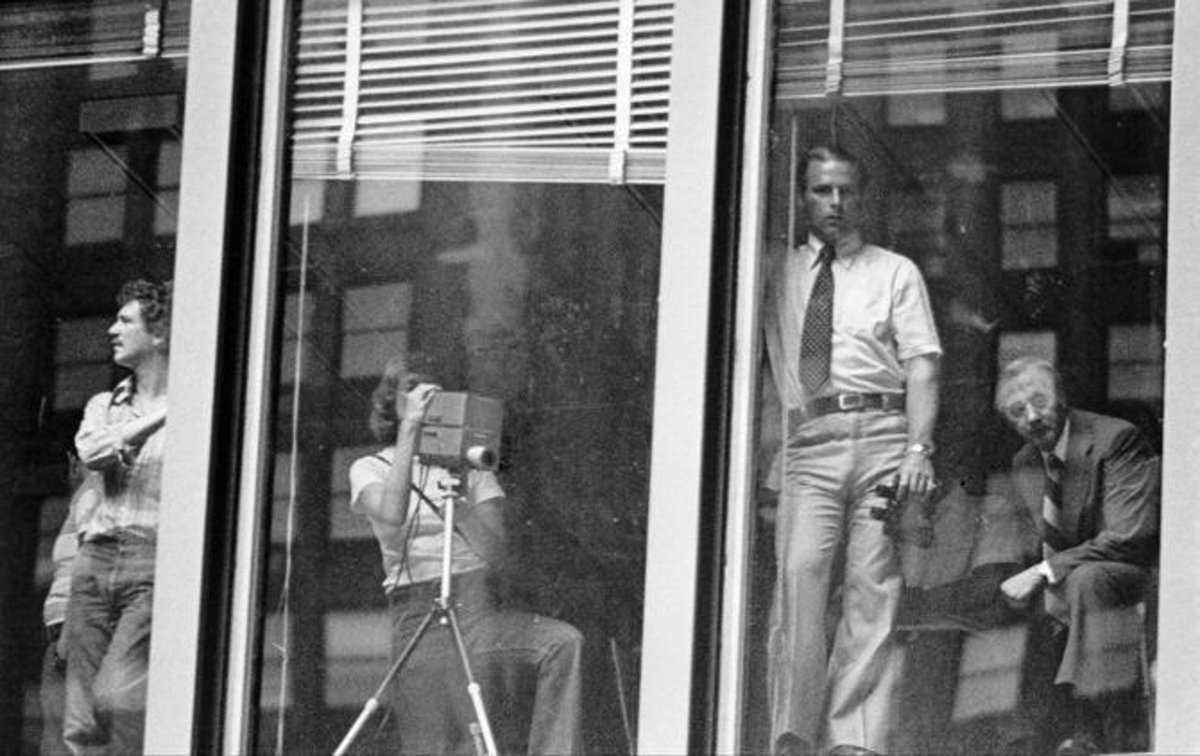
This is an edited version of a presentation for a public forum by the Caston Centre called Human rights, protest and police surveillance: a forum on intelligence gathering and monitoring of public protest, in 2012 in Melbourne. Despite its age, it contains a lot of useful Victorian activist history.
Introduction
There was a political cartoon published in 1997 around the time the Victorian Special Branch files had been exposed by the Age. The cartoon showed an aging and stereotypical political activist sitting forlornly in an armchair, old protest placards learning up against the wall behind him. Underneath the caption read something like “Julian never recovered from finding out that he didn’t have an ASIO file”
It reminded me of the old adage that 'if you are under surveillance, it means you must be doing something effective', which I don’t think is totally true. It does point to the fact, however, that surveillance of our political activities is ubiquitous. It’s all around us and such a basic part of political activism that its part of our folklore and embedded in the culture of social movements. We joke about it and assume it’s happening when we can’t see it. Even the realisation that just about every campaign I have been involved with has experienced some form of state surveillance, if not infiltration, some of which we have documentary evidence for, is telling.
I’d like to begin with something ACT-UP used to begin every one of its meeting with.
Could all representatives of the Victoria Police, Australian Federal Police, ASIO or any other police or intelligence body present here tonight please make themselves known? You can stand up and introduce yourself or just raise your hand if you don't feel comfortable standing.
[Nervous laughter. No one stands]
Thank you.
So, ACT-UP are a grassroots, direct action campaign which began in the late 1980s which challenged cultural and institutional homophobia in relation to the AIDS virus. I attended a few meetings of the chapter here in Victoria in the early nineties and the meeting facilitator began every meeting with those questions, a practice that was adopted from the United States where ACT-UP were under intense FBI surveillance – which they knew about. That practice of asking if any law enforcement were in the room served three functions. If police did not declare themselves then they were formally ‘undercover’ and if they did not have a warrant for that information gathering activity then, the information they collected might have been illegal and may not have been admissible in court – (at least in the US). Either way, it demonstrated that ACT-UP were aware of the potential presence of covert surveillance. Thirdly, the act of doing this before every meeting, even if no police ever identified themselves, alerted every participant in the meeting of the possibility of state surveillance and to modify their behaviour accordingly.
I wanted to demonstrate this at the start because it represents one of the many ways in which activist groups have responded to state surveillance.
Three things
In my mind for activists to respond effectively to surveillance and other forms of political repression we need to have three things.
We need to be aware of the template – an idea of the history of political surveillance and what the state is actually capable of when it comes to surveillance and repression – and I’ll start by discussing some of that important history in a moment.
Secondly, as activists we need to be able to assess the current political context in which we find ourselves, as accurately as possible, in order to be able to determine risks and threats that may be used against us and to make clear judgments about those risks and what we can do about it. This assessment is difficult but something we can get better at.
Thirdly, I believe, activist groups, campaigns, organisations and entire movements, need to learn how other groups and campaigns have effectively responded in the past and what works best. I hope to cover those two things as well tonight.
What is Surveillance?
At its most basic, surveillance is simply observing and collecting information. So what's the problem?
Police say that accurate intelligence is vital for police to perform their job effectively. In fact intelligence-led policing has emerged as a dominant philosophy guiding police strategy in Australia and many other countries - with an emphasis on the collection and analysis of information to guide police operations. Intelligence-led policing doctrine urges police to be ‘more like spies’ and has been prominent particularly after 9/11. It forms part of the larger trend of blurring the distinction between national security and domestic policing, or the state’s military and police functions.
Police are routinely gathering information and always gathering information.
Aside from interviewing and talking to people, police will use a range of covert intelligence gathering techniques and surveillance methods to gather info on organised crime, drug cartels, pedophile rings etcetera, and this surveillance will clearly be used to police criminal activity. Some people make a distinction between criminal surveillance and political surveillance.
Police will use the pretext of gathering information to prevent crime as the excuse for any surveillance and justify it on those grounds – “we need to gather intelligence to prevent crime.” They will use the same legal surveillance methods and technologies, the same equipment to listen into a criminal drug network as they would a political activist group – so what’s the difference?
At what point does ‘legitimate’ police surveillance for a criminal investigation become political surveillance? Is it when the surveillance method itself is extra –judicial (or illegal) as in not authorised through ‘official channels’ – or done without a warrant from a magistrate or senior officer? My guess is that ‘informal’ or extra-legal means are utilised in criminal surveillance operations just as much as in political surveillance operations. Jacob Applebaum made a great point in his talk at Trades Hall earlier this year when he said that even if police have the noblest of intentions, such as capturing pedophiles or intervening in the sex slavery networks – they still should be accountable in regards to the tools, methods and approaches they use. So despite the fact that some uses of surveillance may be ‘legitimate crime fighting tools', we still have the right to demand accountability, judicial oversights and blocks to unfettered or authoritarian uses of those tools, methods and approaches.
But what about ‘political surveillance’ that we are focusing on tonight? If it is just the police trying to prevent crime, or trying to identify any criminal activity or “potential terrorists” in the ranks of our social movements, why are we concerned about it?
Political surveillance and political repression are part of the same continuum and can’t, in my mind, be separated or held up for examination separately.
I would suggest that our concerns about surveillance go far beyond concerns over privacy – and far beyond concerns over police accountability for using covert methods of gathering information. For me, any surveillance of political activity, covert or overt, is intrinsically connected with the threat of political repression.
Surveillance of a political group means that the state has noticed what that group is doing and has dedicated resources to it - and by implication the threat of the state doing something about that political activity is immediately present. Political surveillance and political repression are part of the same continuum and can’t, in my mind, be separated or held up for examination separately.
The Template of Political Surveillance
And in order to fully appreciate what that surveillance-repression continuum actually means we need to look at what’s happened in recent history and look at the actual “template.”
The ‘template’ for modern political surveillance really began at the turn of last century (late 1800’s – early 1900’s) when the most significant threat to capitalist enterprise and corporate wealth expansion came in the form of the nascent Trade Union movement. Around this time in the United States, trade unions were forming and organising workers to fight against the horrific working conditions of the industrial revolution and the right to collectively organise for basic wages and conditions, the right to go home and sleep occasionally for instance- there was plenty of chatter about workers organising across national boundaries to end wars forever and ‘one big union’ etc. – all of which meant that the combined force of the United States government and the US industrial sector was brought to bear upon the movement. The most powerful weapon of the big industrialists at the time came in the form of the Pinkerton detective agency, basically a large private army, which at their peak had more personnel than the US standing army. The Pinkertons, the largest of numerous private detective agencies, were armed to the teeth and hit the unions brutally – basically waging war against them over decades – there were shootouts – and numerous massacres of unarmed strikers and their families, attacks, bashings, threats and underhanded dirty tricks directed against trade unionists and their organisations.
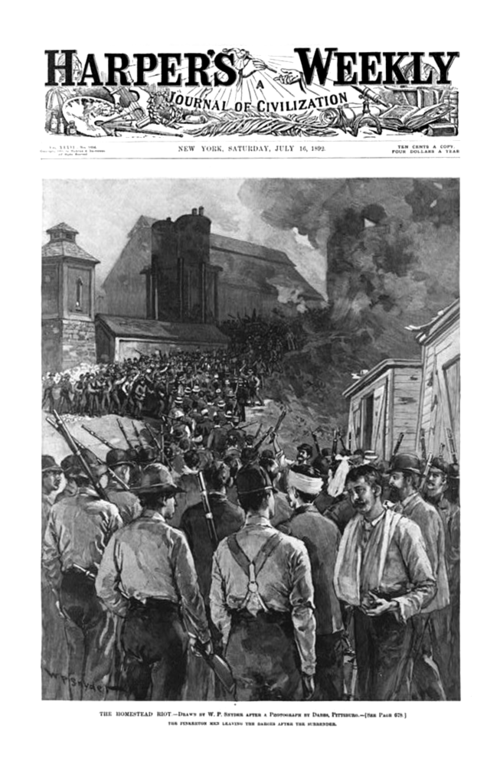
The Pinkertons pioneered a range of covert surveillance and infiltration techniques, not only to collect information to pass on to the employers, but to disrupt and undermine through provocateurs, misinformation and sabotage. One documented tactic was to spread mis-information that strike funds were dishonestly handled by the union officials. In one case in 1906, a Pinkerton agent had infiltrated a large union, gained control over its strike funds, which he lavishly spent and thereby destroyed the union's ability to survive a protracted strike. Pinkerton agents set unionist upon unionist with false rumours and accusations and information gathered was used to discredit unions and undermine public support. If any of this sounds familiar, it’s because a modern template was being created.
The Pinkertons roles and functions were largely taken over by the FBI after the second world war when war veterans in the FBI adopted military grade surveillance technology and espionage methods and applied them for domestic purposes.
The COINTELPRO Years
In March 1971, a grassroots activist group called the Citizens Committee to investigate the FBI, removed secret files from an FBI office in Pennsylvania and released them to the media. That same year due the ensuing media storm of controversy, agents began to resign from the Bureau and blow the whistle on its covert activities.
What we know about COINTELPRO, or Counter-Intelligence Program of the FBI in the states comes from these leaks and from subsequent congressional inquests and Freedom of Information lawsuits that released thousands of files of documents to public scrutiny.
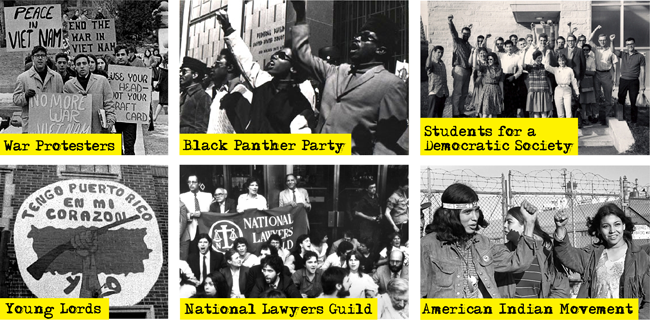
We do know a great deal about how COINTELPRO worked and what it did to progressive movements in the US throughout the sixties. What COINTELPRO stood for was an orchestrated, systematic, highly planned campaign by police and FBI to “expose, disrupt, misdirect, discredit, or otherwise neutralise” domestic activist groups and movements (These were the exact words in FBI official directives). One of the Senate committees later described it as "certain techniques the FBI had used against hostile foreign agents... adopted for use against perceived threats to the established political and social order."
COINTELPRO moved far beyond the law to use fraud and force to sabotage political activity. Groups targeted numbered in their thousands and included the leaders within the civil rights movements, national Council of Churches, American Friends Service Committee, student organisations, anti-war teach-in’s, progressive bookstores, community organisers, anti-nuclear and antiwar organisations, and feminist groups – every group across the broad left in the US was targeted within this decade long program. Puerto Ricans, Chicano, Native American groups and African American organisations were particularly targeted with extreme brutality throughout. At a time when most major US cities were experiencing sustained, disciplined and highly organised protest and ghetto uprisings in the form of the Black Panthers and campuses were erupting in militant protest against the Vietnam War, the FBI were infiltrating, harassing and deploying violence at a scale that still seems somewhat unreal. In the case of Black and Puerto Rican activists, COINTELPRO attacks, including political assassinations, were so extensive, vicious, officially sanctioned and calculated they could only be described as state terror.
Tactics used included infiltration by agents and informers whose main purpose was to discredit and disrupt; psychological warfare and dirty tricks such as false media stories, bogus leaflets, state of the art forged correspondence, anonymous letters and phone calls, spreading misinformation at meetings, setting up pseudo movement groups run by agents and manipulating parents, teachers, landlords, university officials and others to cause trouble for activists. An anonymous letter to a Black leader stating that a white solidarity activist was sleeping with his girlfriend was one such example designed to split alliances and break movement solidarity. Other bogus letters accused prominent leaders of sexism, anti Semitism or being informers, each designed to generate distrust and internal conflict.
COINTELPRO also abused the legal system to harass activists, FBI agents perjured themselves, planted and falsified evidence as pretext for arrests and applied tax laws and regulations to target individuals. They also used conspicuous ‘surveillance’ to intimidate and silence.
Despite the public outrage and official investigations and all the lawsuits relating to COINTELPRO, and the FBI officially ending it as a programme - we know that COINTELPRO style activities continued through the 70’s in the 80’s against Latin American solidarity movements, and into the 90’s and today against anti nuclear and environmental movements and most recently against the Occupy uprising throughout the US. Again the ‘template’ was established. It worked, and the state systematically applied it wherever it saw a threat.
This template has been applied in Australia, in Victoria. We have a long history of political surveillance and infiltration by police. This is our history and it’s important to learn from it.
The AGE Special Branch Leaks
In 1997, The Age newspaper in Melbourne published information, documents and allegations leaked from the Victorian Police Force, presumably by a former police officer, detailing how undercover police officers had infiltrated, spied on, bugged, taped and collected files on just about every group in society that had something to say. The surprise for many of us was not that the Victorian Police were infiltrating and spying, but the extent.
The confidential dossiers, records and files obtained by the Age date from 1985, compiled after the then Victorian Government disbanded the notorious Special Branch in 1983, and cover the years up until 1992 when the Unit's role was taken over by the 'Protective Security Intelligence Group' who continue to gather information today.
The Melbourne Peace Fleet, The Melbourne Rainforest Action Group, Friends Of the Earth, Animal Liberation, Greenpeace, the Wilderness Society and many other groups and campaigns were all infiltrated by undercover police officers at various times.
Alongside these groups were a few far-right and neo-fascist groups such as National Action. However, there were also hundreds of other groups such as the Council of Single Mothers, The Australian Conservation Society, Friends of the ABC, community radio station 3CR, community legal centres, feminist groups, migrant groups, tenants' groups, disabled and elderly rights groups.
In many cases these activities described were 'illegal', operated without the knowledge or consent of the then government, in fact, against the stated wishes of the Cain administration, which made it clear that it would not tolerate surveillance of community groups when it disbanded the Special Branch. It was alleged by the former head of the police complaints authority that senior police defied state government orders to incinerate thousands of secret Special Branch files and instead had them stored in suburban police stations and continued updating and using them. (The Age 16/12/97) What is not clear is whether or not, or at what level, the government knew about these activities, or whether senior sections of the Victorian Police were operating and giving orders independently.
The activities of the undercover operatives often involved disruption or sabotage. An undercover officer infiltrated the Melbourne Peace Fleet and managed to sabotage its ability to campaign by almost sending it broke.
Over a four year period up to 1990, the police unit worked closely with Army Intelligence units and ASIO, often swapping information and jointly "assessing" the peace movement in Victoria.
The unit conducted numerous searches without warrants, allegedly hid secret files from the police ombudsman during an investigation, and often sought information that the police could use in the media to discredit activists groups, particularly those involved in legal rights, police powers or campaigning about police shootings. In some cases the unit was involved in spying upon and deliberately undermining community efforts to bring other police to justice.
So what did we do about this in Victoria? At a joint media conference, a coalition of ten groups, including Friends Of the Earth and Liberty Victoria (Victorian Council for Civil Liberties), condemned the activities of the secret police and called for a full inquiry into the Operations Intelligence Unit and the current Protective Security Intelligence Group. This call was joined by many other groups and individuals over the next few days, including the former premier John Cain, and 500 people attended a public meeting. Many groups and individuals lodged Freedom of Information Requests to obtain their files and a public campaign against the existence of 'Secret Police' was organised by the Federation of Community Legal Centres.
For activists, this leaked information serves as a valuable snapshot into the culture and attitude of Victorian police, and into the range and extent of their abilities to spy, sabotage, undermine and provoke from within a campaign.
In the United Kingdom there is currently legal action against the Metropolitan Police on behalf of eight women who were deceived into having long term intimate relationships with undercover police officers. The five undercover officers were all engaged in infiltrating environmental and social justice campaigns between the mid 1980’s and 2010 and had relationships with the women lasting from 7 months and the longest spanning 9 years. Through their collective experiences, the women have identified a pattern that covers more than two decades of police operations and indicative of systemic abuse of female political activists. Officers were given extensive training in how to spin tales, groom, deceive and embed themselves deeply in protest movements.
Despite all our awareness of police infiltration, this horrendous sexual and psychological abuse by undercover police officers is still shocking.
The Anti-Terrorism ramp up
'Enemy creep' is a feature of counter-terrorism politics around the world – the gradual shift in the definition of terrorist to fit a widening circle of dissenters.
The context for political surveillance was ramped up a thousand-fold in the context of anti-terrorism over the past decade. Since 2001, over 40 security-related laws and statutes have been passed. Internal security infrastructure, police and intelligence agencies have been expanded to an unprecedented degree. ASIO staff has increased from less than 1000 in 2005 to around 1800. (an 80% jump)
As always, non-white and non-mainstream groups have been targeted most relentlessly. Complaints about police surveillance of our predominately white social change campaigns seem almost trivial when compared to the constant, daily campaigns of surveillance, infiltration and harassment experienced by Australian Muslim communities, the Tamil community, and the Kurdish community in Victoria, which only a few years ago tried desperately to build wider community support against the listing of the Kurdish PKK as a “terrorist organisation” – which Australia did after a request from the Turkish prime minister – an action which literally criminalised the Kurdish community for any political activity or support for Kurdish rights.
'Enemy creep' is a feature of counter-terrorism politics around the world – the gradual shift in the definition of terrorist to fit a widening circle of dissenters. We have been seeing this in Australia. Asylum seekers still languish on islands and in detention centres for years on dubious secret ASIO assessments, often sourced from security forces who routinely use misinformation to discredit opponents.
In 2006, Victorian police utilised counter-terror powers to search activists from the Black GST protest group. Environmental activists faced charges designed to thwart terror attacks on shipping. A political artist had public work removed unlawfully by local police on the grounds that it could be seditious. In 2007, the houses of activists associated with the G20 protests were raided by officers from a NSW counter-terror unit.
The picture of surveillance we have today is that of counter-terror laws and resources increasingly shifting toward the containment of domestic protest movements.
The Scott Parkin Deportation
In recent memory was the arrest, detention and deportation of US peace activist Scott Parkin’s deportation, which highlighted the links between the CIA which was very interested in Scott due to his involvement in a strategic, nonviolent campaign against Haliburton’s war-profiteering, and Australian security services who arrested him on the morning Scott was to give a workshop to Australian activists on those same, people power strategies.
In Australia at that time we responded using Brian Martin’s Backfire model – something I’d recommend investigating. We exposed what was going on as quickly as we could. We had people sending media alerts from laptops outside the Carlton police station where Scott was first detained. We humanised and validated Scott as a victim of the repression. We called him “our friend” in the media and talked widely about his nonviolent peace work, resisting attempts to cast him as a ‘terrorist’ or US agitator, we countered every statement from the Government. We mobilised support across Australian and in the US – holding public protests outside ASIO offices and confront Ruddock at his public appearances, and although we didn’t stop his deportation we managed to maximise the public outrage and political backlash as we could, almost as a deterrence to future ASIO deportations.
The BackFire model of responding to political repression includes five “Rs” which revealing the injustice, redeeming the victims (humanising them) , reframing the injustice as part of our story, redirecting the attack against us into something tha puts them on the back foot, and resisting clearly and assertively.
Heidi Boghosian, Director of the National Lawyers Guild in the United States has said that the two most significant trends in surveillance of activists are “One, the use of high-technology and sophisticated military equipment [by police], and two, cooperation between law enforcement and the private business sector, especially with regard to surveillance/spying.”
At the end of 2011, online community Anonymous obtained information that it passed on to Wikileaks about the staggering scale of the international surveillance technologies industry.
The evidence showed that most of these technologies – from internet monitoring technologies to computer viruses to GPS tracking devices – are manufactured and sold by companies in Europe or North America, with a few notable exceptions like India, South Africa and Brazil.
Buyers are mostly corporations and governments in the global north, but also include authoritarian regimes in places such as Syria, where these technologies are actively used to identify and target human rights activists, political dissidents and free speech advocates.
Privacy International, a partner organisation of Wikileaks, published this and similar information as part of an ongoing investigation called Surveillance Who's Who / Big Brother Inc. In collaboration with the Bureau of Investigative Journalism and Open Spending, the project involves aggregating data about which governments and corporate agencies are attending surveillance technology trade fairs and buying and selling technologies.
Police have access to technology to monitor protesters such as facial recognition, Internet data mining, and, in the United States, and maybe here before very long, even drones.
Data available to police, security and other government agencies under Australian federal law (2012) includes phone and internet account information, outward and inward call details, phone and internet access location data, and details of IP addresses visited.
Access to this information is authorised by senior police officers or officials rather than by judicial warrant. Data is also accessed by state police and anti-corruption bodies, government departments and revenue offices, and many other official bodies.
The largest user of telecommunications data in 2010-11 was Victoria Police with 65,703 authorisations, an increase of more than 50% over two years. ASIO stats are not public.
Private Intelligence gathering companies operate in Australia. These companies, such as NOSIC (the company contracted by the Australian Federal Police to monitor climate activists) often have contracts with police, government or corporation and will extensively monitor, collate, assess and report on publically accessible information about individuals or organisations. It is ‘open source intelligence’. For example; a company may monitor websites, social media, email lists, media releases, and any public documents relating to an activist campaign, compile it into reports and sell that information to police or companies. NOSIC is the National Open Source Intelligence Centre (Australia) – a tiny operation based in a suburban home in Croydon and proudly provides Services such as ''issue monitoring'', ''tactical intelligence'', ''threat analysis'' and ''trend analysis and forecasting focus on emerging patterns and trends in activism''
British government proposal for a nationwide electronic surveillance network that could potentially keep track of every message sent by any Brit to anyone at any time. A standardized mass-monitoring program capturing of every email, every post and every tweet would spell the creation of a formidable new surveillance regime. – Would cost billions to set up. US is already building a super computer systems large and capable to decrypt encryption algorithms that have been impenetrable for the last 15 years or so. (WIRED)
CONCLUSION
The template for repression is very old, but the political context for surveillance and repression is always changing. As activists we need to analyse and understand this context.
Good context assessment is about analysing your movement and the government policies or cultural norms it opposes, how large you are and what sort of political actions you take. What’s happening and who is saying what around you.
The culture within police and security agencies of seeing people, citizens, dissidents and protestors as “enemies” has given birth to actions with grave implications for fundamental human rights and democracy. The strategy of state repression is multifaceted and sophisticated, governments have marginalized, channeled, infiltrated, co-opted, and repressed progressive movements throughout the Western world for well over a century.
So what do I suggest?
A good general guideline is:
Organise effectively and well. Cohesive, democratically organised groups that can include, engage, support, train its members form the best defense against political repression.
- Assume that police are monitoring online communication, assume your phones and text messages are being observed, and that anything planned in an open, public meeting is known. For most open, democratically organised movements, campaigns and actions this is business as usual.
- If you do want to organise something that depends on surprise, simply don't do it on the internet, on the phone or in an open meeting. A security culture and there are good resources - ActivistSecurity.org Ruckus Society
- If the surveillance is harassing, intimidating or impacting on your work, record everything to look for patterns. Discuss and analyse what is going on so you have the clearest possible picture. Analysis is vital for getting your security precautions right.
- Seek legal advice as soon as any surveillance is detected. Avenues such as Freedom of Information requests or civil suits may be possible. Legal support will be a part of your support structure.
- Set up support structures. Tell others who you trust, other campaigners and activists and allies such as parliamentarians, priests, Imams or other community leaders and ask each for specific support. The reason for this is not to isolate yourself but to systematically increase your profile and links with others in society. It signals to the people undertaking the surveillance that you ‘have friends in high places’ and serves to deter further harassment – repression aims to marginalise you politically – it is important to assertively counter this.
- Likewise – if you know of others who are experiencing some form of surveillance or harassment then offering genuine solidarity and support is vital.
- You or your group can then make a clear decision to expose the surveillance to the public and the media. Provide evidence to journalists, prepare and release a public document. Expose the surveillance as undemocratic and an injustice and demand redress publicly and in conjunction with legal action. Don’t wait for the courts – use public protest and build public outrage outside as well as in in the courts.
It is well worth remembering that all governments, no matter how openly 'democratic', have both overt and covert aims and methods of achieving them. Also, for all their efforts and expense, they have consistently managed to fail to stop ordinary people struggling for and creating change.
The movement leaders and organisers most targeted during the COINTELPRO years were building alliances between movements, between black and white communities and organising widely and strategically for real change. That’s what made them targets but that’s also what made them so powerful.
Strong, democratically organised, powerful movements for change – movements which are authentically diverse and inclusive and can build support across differences are both, the most likely targets for political repression and our best defense.
Anthony Kelly, 2012
This is an edited version of a talk at the Human rights, protest and police surveillance: a forum on intelligence gathering and monitoring of public protest, on 17 May 2012 at the Melbourne City Conference Centre, organised by the Caston Centre for Human Rights Law.
An Audio recording of the forum is available.