How activists can encourage and support whistleblowers
Whistleblowers can shake and undermine governments, industries, and major institutions. Even minor leaks can provide vital intel and form a major boon for a campaign. Every bit of encouragement, support and protection we can provide as a movement is worth it.
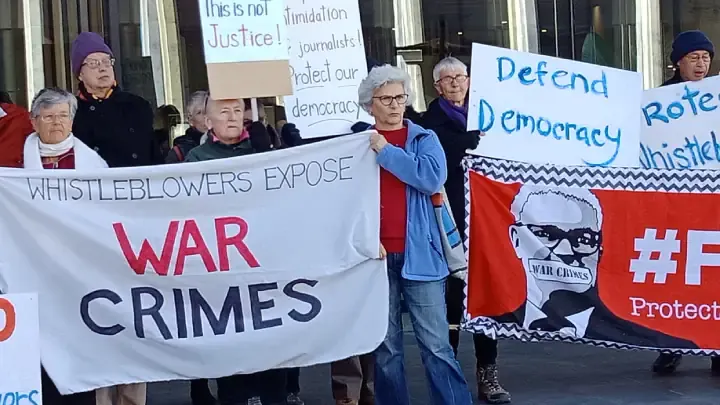
Whistleblowers from within institutions, corporations, government departments, police or military can be critical to movement success and their testimony is often the key to exposing injustice and creating change.
Whistleblowing poses high risks and personal costs and always takes a fair degree of courage. Institutions clamp down on and deter whistleblowing for good reason. To expose an injustice, whistleblowers will have to place a great deal of trust in who they are communicating with.
Despite well-developed cultural, legal and bureaucratic mechanisms used to enforce internal obedience and discipline, whistleblowing and other forms of internal resistance are surprisingly common. Almost every campaign that I have been involved with over the past 40 years has had some form of sympathetic approach or whistleblower leak from inside the industry that we were protesting.
Nonviolent politics has long recognised that societal institutions, even rigid hierarchies such as the police or military, are not monolithic, but are in fact, riddled with dissent. Institutions are made up of individual human -beings who are subject to the same or similar cultural forces, ideas, information and influences that shaped your own political positioning. It's one of the reasons that tactics and activist behaviours that don't attack or threaten staff or workers tend to be more strategically effective over time. It makes it far more likely that sympathetic elements within the opponent's workforce will lean in toward the movement in some way.
Resistance Inside the Army (or RITA, as it was termed) as documented by David Cortwright (Soldiers in Revolt: GI Resistance during the Vietnam War, 1975) and Max Watts (Left Face, 1991) is a classic example of this. These two researchers, both of whom worked closely with soldier resisters during the Vietnam war, estimated that around 55% of US military personal were involved in some form of resistance to US war-fighting strategy - whilst inside the military. To its shame, only small sections of the anti-war movement in the US, Australia, Europe and Canada actively supported or were even aware of internal soldier resistance. Most supported conscientious objection or draft-dodging in some way (i.e.: refusing to enlist), but most of the anti-Vietnam war movement remaining totally ignorant of the extent of both spontaneous and organised resistance by enlisted soldiers, sailors and air-crews, as well as the extent to how their resistance activities, which included occupations of airfields and mutinies on aircraft carriers, affected US war-fighting capacity. Cortwright and Watts even argue that the expanding RITA altered US war strategy and was a major factor in the eventual withdrawal from Vietnam by 1973.
The Chelsea Manning Support Network operated for seven years and was able to cover 100 percent of Chelsea Manning’s legal fees throughout her court martial — nearly $400,000 — and mount a huge publicity campaign to raise awareness about her situation. Other groups like the Courage Foundation support several “truth-tellers” internationally, and fundraise for the legal and public defense of specific individuals who risk life or liberty to make significant contributions to the historical record and are subject to serious prosecution or persecution. The more support existing whistleblowers receive, the more likely others will follow.
Activists who tend to lump all workers, employees, personnel of an institution as 'part of the problem', or 'enemies' even if they're in uniform, are at a strategic disadvantage. Sometimes this is ideological or the result of political framing that divides people into simplistic or identitarian categories. Sometimes it's just inexperience or a lack of movement history literacy. Seeing people on the opposite side of a picket-line or blockade as potential allies, sources of information or potential whistleblowers can be tactically and strategically vital.
So, what can activists, organisers and movements do to encourage and support whistleblowers?
- Send out invitations. Publicly address and encourage people within the institution to blow the whistle on unjust or illegal practices. Talk about people of conscience within the institution. Actively and openly call upon people of courage and conviction within the ranks to tell their story. At rallies and public events actively engage with staff or rank and file police/military to demonstrate that you are not hostile to them as individuals.
- Don't alienate them! Avoid generalised statements that are likely to deter whistleblowers from even approaching you. This is why the generic slanders of workers can be so detrimental. Statements such as “Everyone who works for Exxon should be ashamed of themselves" are likely to dissuade potential whistleblowers from trusting the movement enough to contact you. If the activist group or movement is perceived to be hostile, violent, angry at staff or rank and file police/military then whistle-blowing is far less likely. Police or enlisted personnel who are sympathetic to the movement are less likely to take enormous risks in reaching out to you if they hear ‘All Cops are Bastards’ chanted incessantly. Movements that target their critiques (and limit their hostility) toward management, Ministers, industry leaders or the actual decisionmakers are far more likely to be approached by potential whistleblowers.
- Communicate your support. Use leaflets, speeches, union newsletters, social media and statements to the mainstream media to show that you or the movement can be trusted to support and protect whistleblowers. Let them know that you are open to hearing from them. Don’t make promises you can’t keep but offer support when and where you can.
- Create avenues for communication. Develop or utilize secure drop box links that you actively monitor. SecureDrop is one open-source whistleblower submission system that media organizations can use to securely accept documents from and communicate with anonymous sources. It was originally created by the late Aaron Swartz and is currently managed by Freedom of the Press Foundation. Instructions for installing Protonmail, a free, encrypted email service can be found here.
- Create avenues for interaction. Develop activities or events that encourage interaction between the movement and workers or staff. Organise a BBQ or dinner for staff, a public meeting for workers. In Australia at Roxby Downs, anti-uranium activists held public meetings in the township to listen to the concerns of mine workers and their families. During the Vietnam War peace activists and Veteran groups set up G.I. Coffee Houses near military bases. The principle is the same; interaction generates trust and encourages internal dissent.
- Prioritise and actively engage with any contacts. Potential whistleblowers will often put out subtle 'feelers' long before disclosing who they are or before releasing any information. They are seeking trusted contacts and testing you out. How activists respond to these initial contacts can be critical. Be open to communication that may appear suspicious at first or from dubious or anonymous sources. The general rule is to be respectful and courteous to all contacts as any one of them could end up being a critically important whistleblower.
- Ensure confidentiality. If a potential whistleblower does make contact with you and identifies themselves in some way, make it a priority and do everything possible to ensure confidentiality. Recommend that any contacts do not contact you from their office or work phone or email, or using any device over their workplace’s WiFi. For maximum security, recommend contacts use a VPN. Ensure that others in the group maintain the confidentiality of the contact.
- Share resources for whistleblowers. Provide them with a copy of The Whistleblower’s Handbook, now entitled Whistleblowing: A Practical Guide. It is available for sale and is a free download here. Based upon hundreds of interviews with whistleblowers, this book provides insights, lessons and important advice for people considering blowing the whistle in the public interest. Movements can help potential whistleblowers to develop skills, such as telling their story succinctly, understanding media operations, finding allies, and staying on message. Many employees do not have the sorts of knowledge and skills that activists take for granted. The Human Rights Law Centre’s Whistleblower Project (Australia) is a dedicated legal service which provides confidential legal advice and representation to whistleblowers, as well as advocating for stronger legal protections and an end to the prosecution of whistleblowers. Movements can liaise with whistleblower support organisations, for example Whistleblowers Australia or, in the US, the Government Accountability Project. These support groups hear from numerous whistleblowers and can put them in touch with relevant movements. Some movements have set up ongoing support groups for whistleblowers that raise funds and generate public and political support.
- Security & protection: The risks for a whistleblower increase dramatically once they have made contact and even further if they decide to go public. Many will remain want to remain anonymous, and feed information to the media or action groups. This reduces the risk of reprisals, and the whistleblowers can remain on the job, collect more information and leak again and again. Discuss with them what their fears, concerns are and help them conduct a risk assessment; which is essentially listing, discussing and then evaluating each identified risk. Seek out legal support for them which is capable of supporting them (See 8 above). Work with your networks or activist groups to provide as much support, security or protection as possible. In some cases this may mean making sure someone trusted is with them 24 hours a day for a while. This form of 'protective accompaniment' would mean creating a roster to have trusted people stay with the person and a protocol to contact more support if there is a threat or incident.
- Work with trusted journalists. The decision to go to the media needs to be considered carefully and the whistleblower should be supported to make the best and safest decision for them as they will bear the vast bulk of any consequences. Having a high profile in the media can be a risk but can also lead to additional safety. Professional journalists have ethical obligations and rights to protect their sources, also referred to as source confidentiality. It is a right accorded to journalists under the laws of many countries, as well as under international law although it is often contested. It prohibits authorities, including the courts, from compelling a journalist to reveal the identity of an anonymous source for a story. This principle is articulated in the Media, Entertainment and Arts Alliance (MEAA) Journalist Code of Ethics as: Where confidences are accepted, respect them in all circumstances. Some journalists risk jail to protect their sources. Not all whistleblowers will want to work with the media and go public. Most may wish to leak information to you and remain entirely anonymous. But for those who do wish to go public, your support in seeking out and working with an experienced, professional and trusted journalist will be invaluable. Take the time to find the right one. Not all journalists will act ethically and will also have their own interests in breaking a story. You can act as a go-between at the early stages to reduce the risks for the whistleblower.
Whistleblowing poses a serious threat to power, privilege and the continuation of anti-democratic or authoritarian practices. Our movements grow stronger when we support them. Even minor leaks can provide vital intel and form a major boon for a campaign. Every bit of encouragement, support and protection we can provide as a movement is worth it.
For more resources see:
Brian Martin's Whistleblowing: A Practical Guide
The Whistleblower Project - Human Rights Law Centre
Anthony Kelly